
There’s a multitude of different Dicyrtomina springtails, a lot of them with somewhat confusing identification. Many of them are what are called “colour-pattern species”, which are defined based on visual appearance, but being morphologically very similar or the same as others. Sometimes this can be because they’re actually morphologically the same, and other times they’re just similar but have not been looked at in detail.
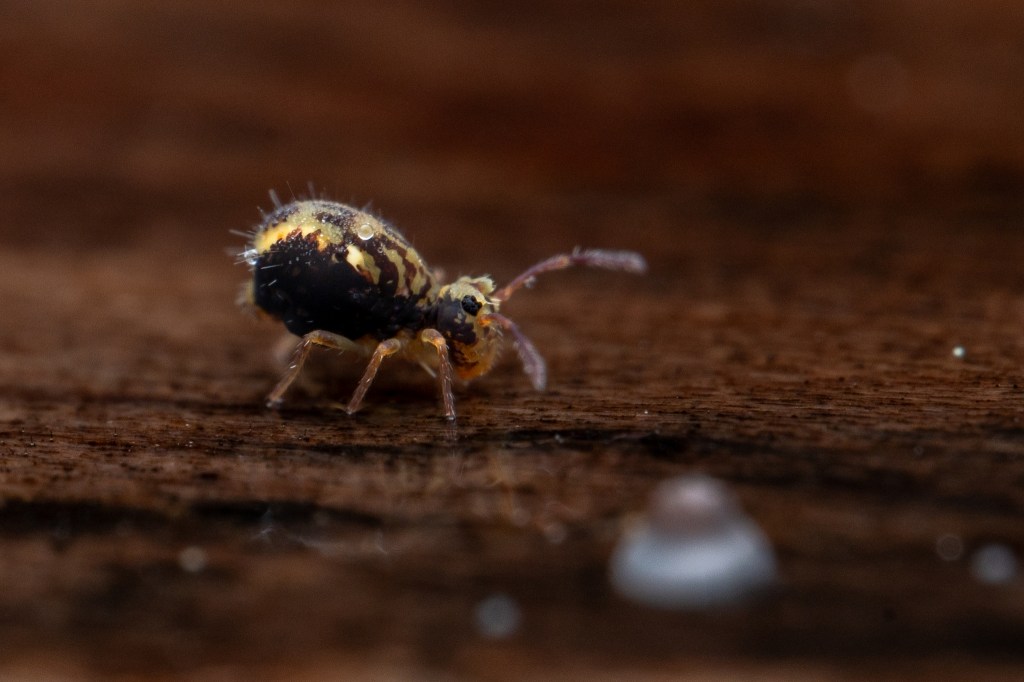
Today we’re discussing only two species, which are fairly widespread throughout the northern hemisphere – Dicyrtomina ornata and Dicyrtomina saundersi. The main ID feature normally is the “butt blotch”, and we say that when the posterior abdomen has a solid dark blotch surrounded by light colour, it’s D. ornata, but when the posterior has a series of about 5 horizontal lines with 1 vertical line (aka the “pine tree” pattern), then it’s D. saundersi. Beyond this basic mostly unambiguous pattern, there are also a variety of other marks to look for, many of which also help differentiate them from other species.
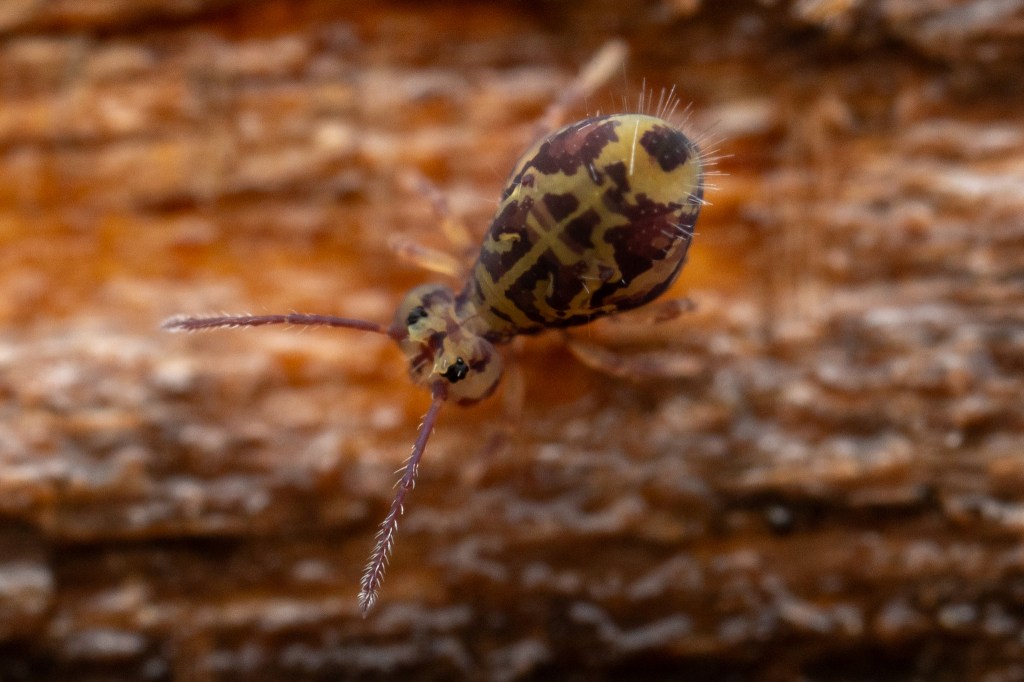
A major mark is what many people have called the “spaceman” pattern, which is on the anterior dorsal area of both species, and looks like a person with 2 arms, 2 legs, and a head. At first glance, the spaceman on both species may look the same, but there are some subtle differences. These differences can help you ID them even if you can’t see the butt blotch, or at least give you some really good hints, or remind you to reconsider your guess.

So the main spaceman pattern differences are these:
- saundersi usually has a tall split-apart “helmet”, whereas ornata helmet closes at the top and is more tapered.
- ornata often has a big gap right in the middle of the face, making the top of the helmet float far above
- ornata usually has “heels” together, with saundersi often having a wider stance
- saundersi often has a wider gap inside the chest
A good way to learn more is to load up a page of Research Grade observations of each one on iNaturalist, and just go through each one and try to find some differences. Enjoy!
 Ptenothrix
Leave a comment