
Ptenothrix beta is a medium-large globular springtail from the west coast of Canada, the USA, and probably Mexico. It’s seasonal for the non-summer times of year, and prefers wet coastal forests. You can find it by panning dirt paths in the forest, or low undergrowth such as Lily of the Valley that hold ground humidity, or on more humid days you can find them climbing up all sorts of taller foliage such as Salal and Huckleberry.
Identification of P. beta is mostly about distinguishing it from P. delongi in the north and P. californica in the south. For all of these Ptenothrix species, it helps to come up with mnemonics for the different patterns they have on their head and abdomen, so you’ll hear some of our often humorous words for these abstract shapes in the description below.
Here’s a starting diagram showing a somewhat typical Ptenothrix beta, and with several of its visual features highlighted. None of these are required on any particular P. beta, but their presence leads you toward the ID, and each will help you rule out certain other species. I’ll describe each below.
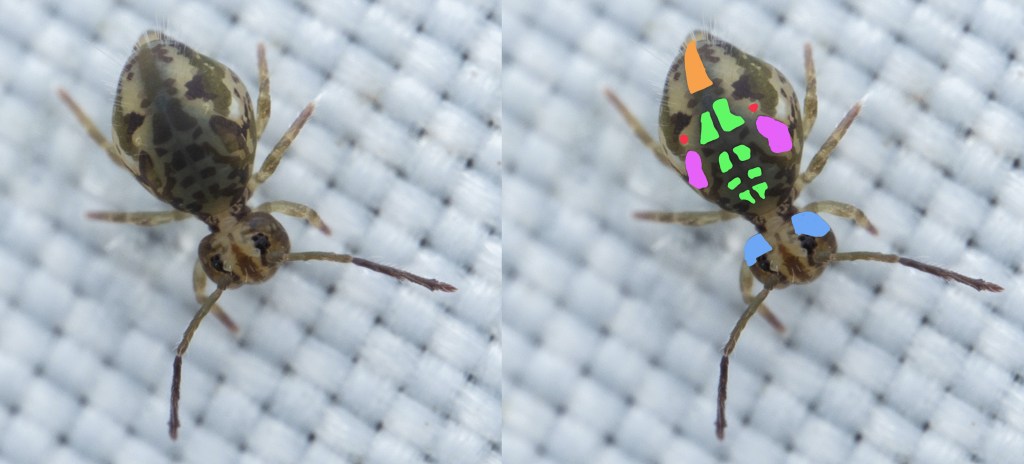
orange – the carrot
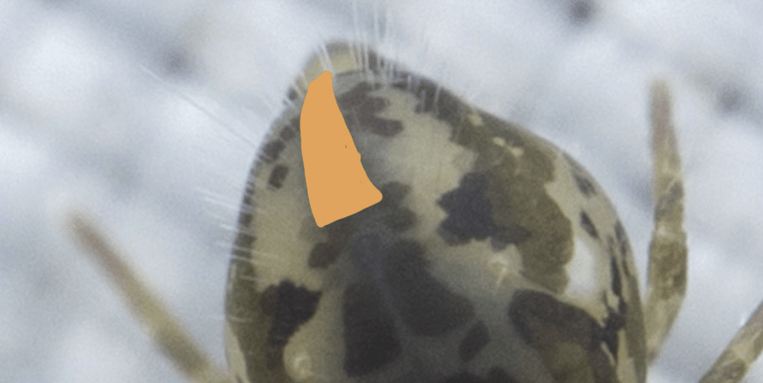
This is often the main feature for P. beta ID – it’s a large tapered shape on the posterior, sometimes with some other smaller markings beside it, as seen here. Quite often the carrot has a small “empty box” above it, with dark lines for sides. You can see hints of that here, but I haven’t outlined it because this one is not a great example for that.
With certain other contrasting shapes on other species, we will be able to rule out beta in certain cases. For example, P. delongi will usually have a wide bottomed trapezoid here, and P. californica will have the “turnip” pattern which is wide and rectangular with 2 “leaves” at the top.
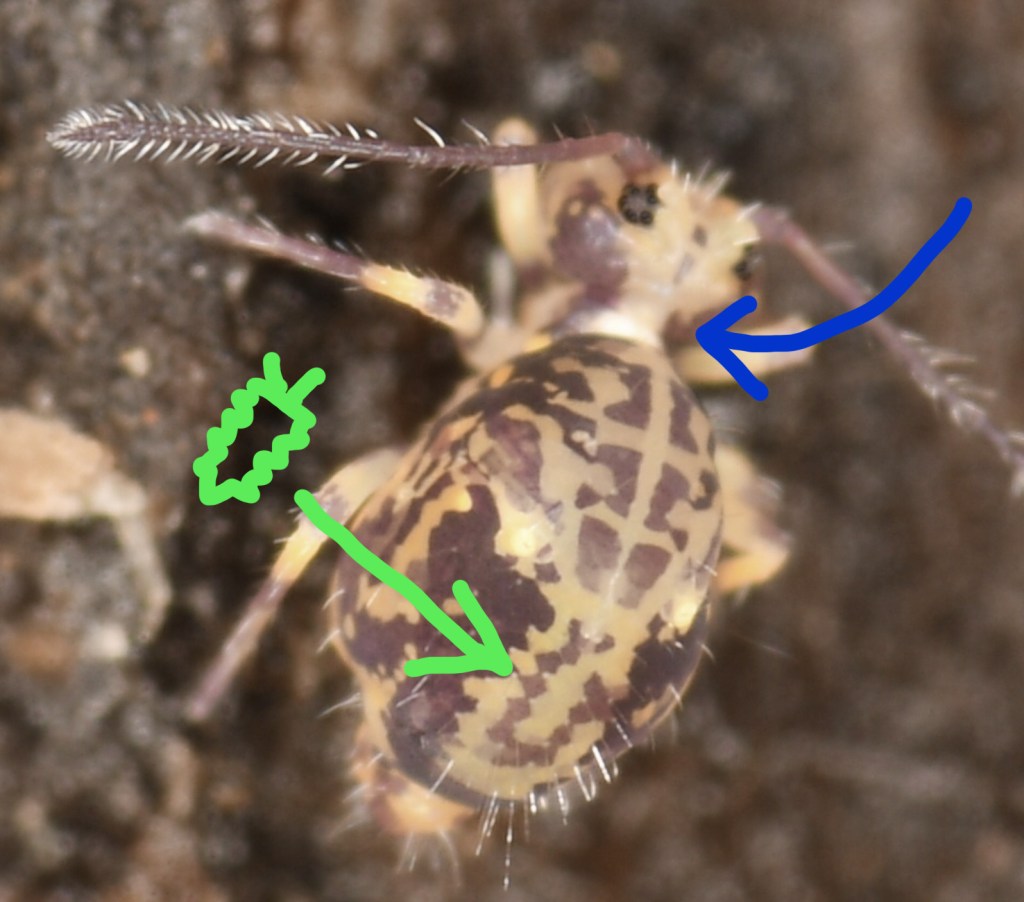
green – central polygons
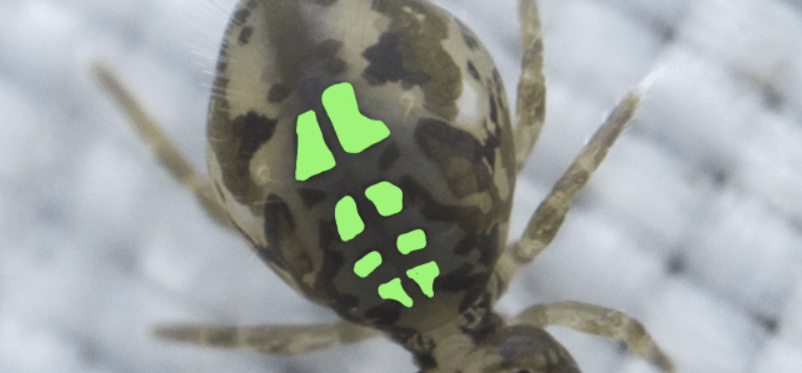
It’s really common for most Ptenothrix to have some kind of interesting pattern on the anterior dorsum. P. beta has this sort of bilaterally symmetrical polygon pattern, usually with 2, 3 or 4 pieces. They are always dark colour if present, with light background colour separating them. You’ll see similar patterns on P. delongi and P. californica, and the “inverse” (light polygons separated by dark) on undescribed species 6.
pink – saudi arabia
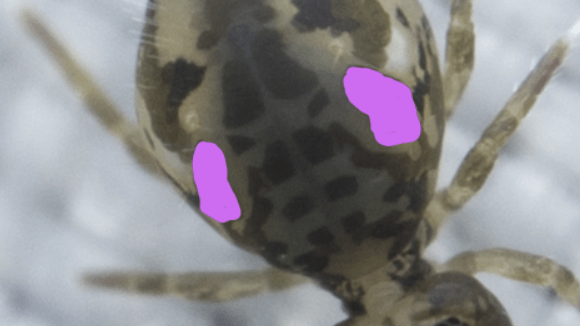
These are larger shapes lateral of the center polygons, and just in front of Bothriotrichum A (dots marked in red). These are interesting because in the same spot on P. delongi, we have a much smaller / thinner / sharper shape here, so having these bigger shapes helps us find another visual anchor for P. beta. They sometimes also have a lighter colour inside them, which doesn’t happen on P. delongi either. I’ll have more direct P. delongi comparisons below.
blue – high dark cheeks
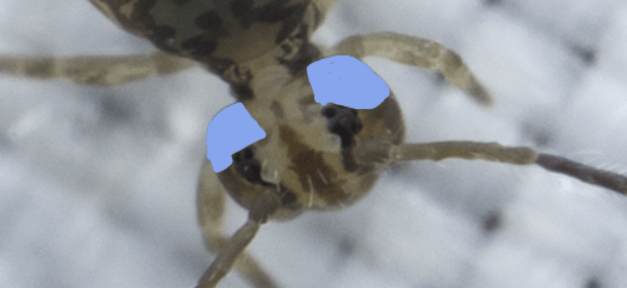
On P. beta, the rear cheeks are dark and almost always stay dark right up to the back of the eye. This is often a really useful mark distinguishing from P. delongi, which will have a separated “ear” mark behind the eye that doesn’t connect down to the rest of the cheek mark.
Comparisons to P. delongi
P. delongi is definitely the most similar species to P. beta, and poses a significant ID problem. I think the best way to go about this is to depend on the “shark” pattern on the sides of P. delongi, so I’ll show you a comparison of the two from the side here.
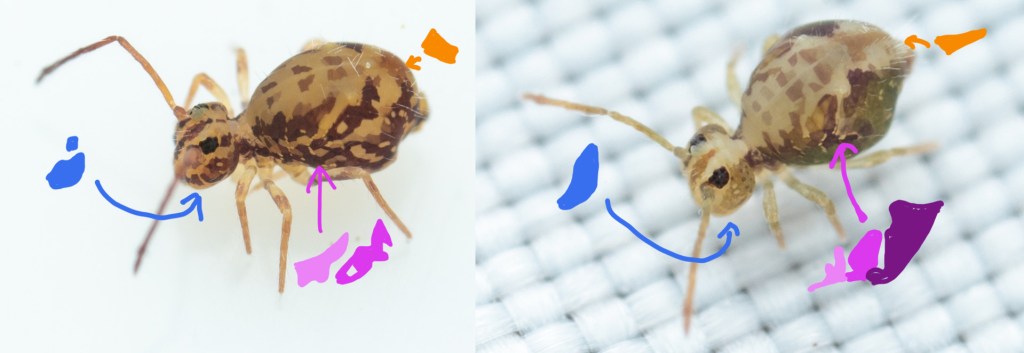
What we’re seeing here is that they both have central polygons that are roughly similar, so I haven’t marked those, but I have marked the cheeks, side stripes, and butt pattern.
For the cheeks, the pattern is traced in blue, and it shows that P. delongi has a separated ear mark but P. beta has dark cheeks all the way continuously up to the eye. On the side stripes, we have the darker pink “shark” illustrated on P. delongi, with the same colour used to mark “Saudi Arabia” on P. beta. The other surrounding shapes are not necessarily as consistent, but are marked here to show the positioning.
Finally at the rear we see the typical wider butt pattern for P. delongi compared to the carrot of P. beta. Watch out though, because delongi is not consistent in this, and can often also have a thinner pattern that looks a lot like the carrot, but has maybe more parallel sides to it with less tapering than the beta carrot.
A note on P. californica
Within California, the ranges of P. californica and P. beta overlap greatly, so we need to know how to distinguish them there. P. californica is a bit less studied, and may have more alternate visual patterns, but the major consistent ones are the white neck and the “hollow turnip” pattern on the butt instead of the beta carrot. We’ll have more to say in the future about californica as we learn more.
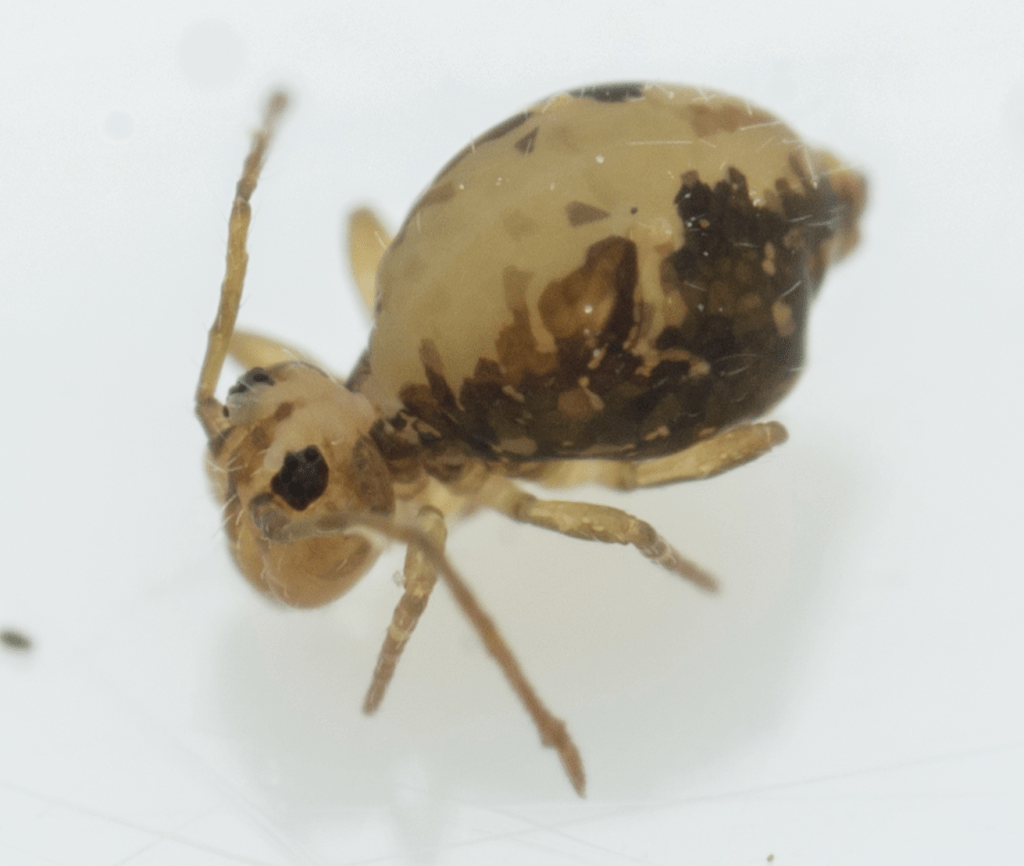
Colour variance amongst betas
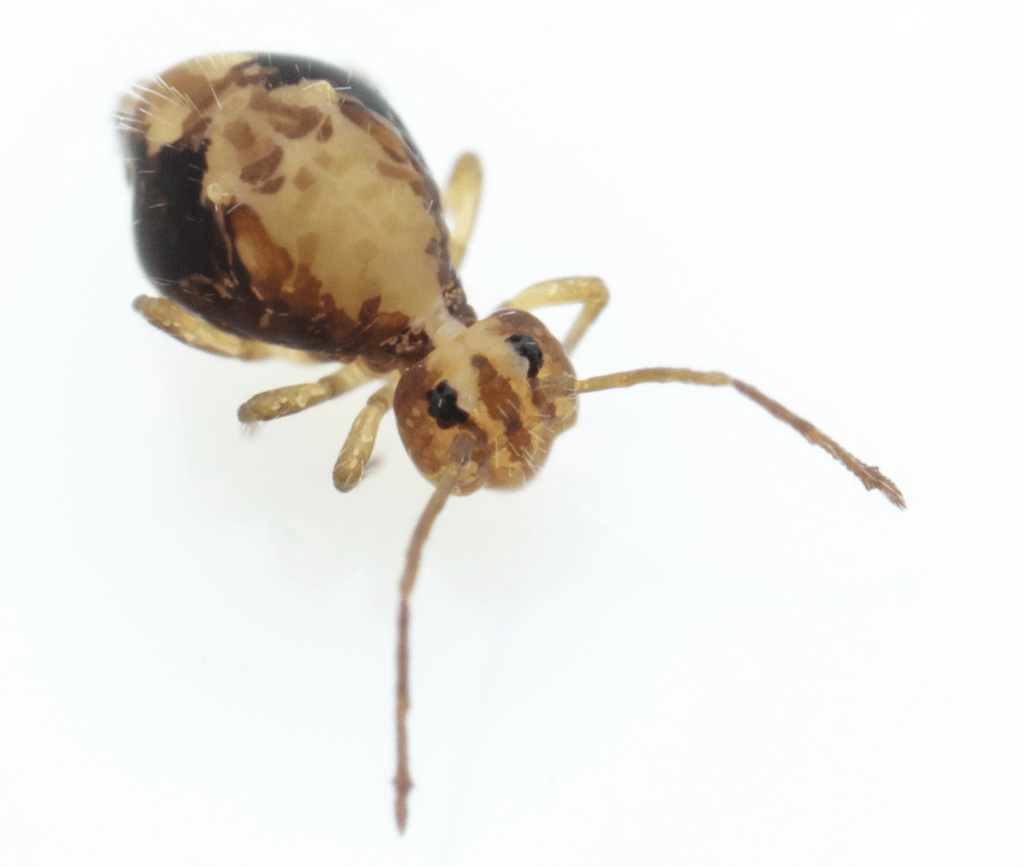
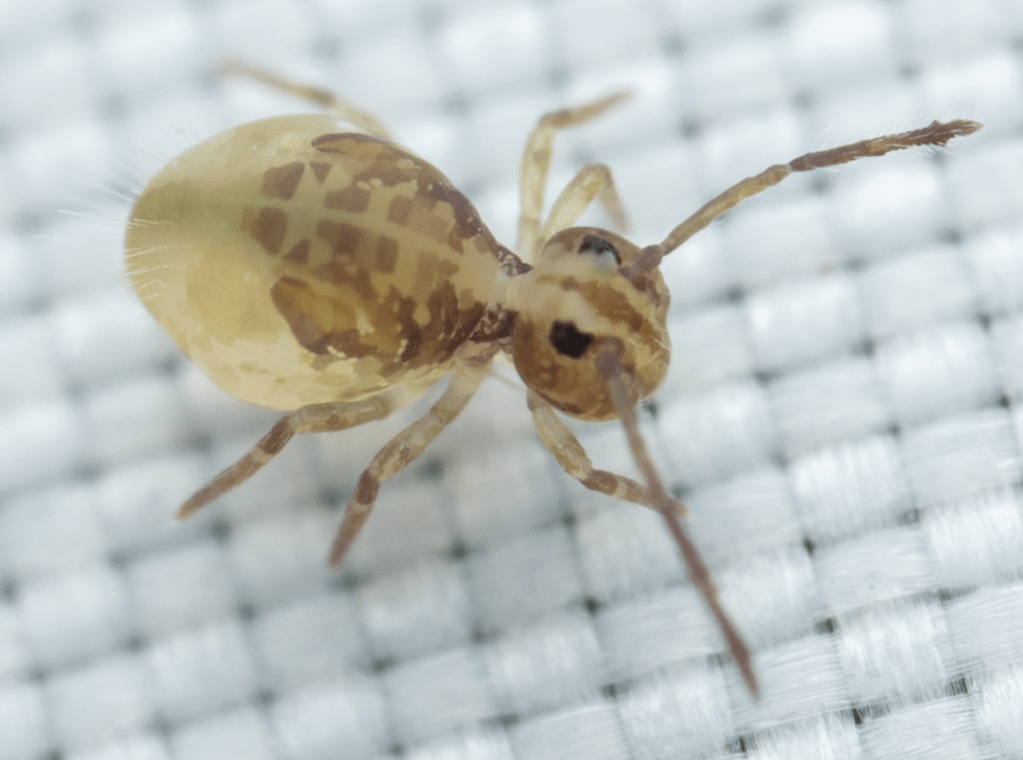
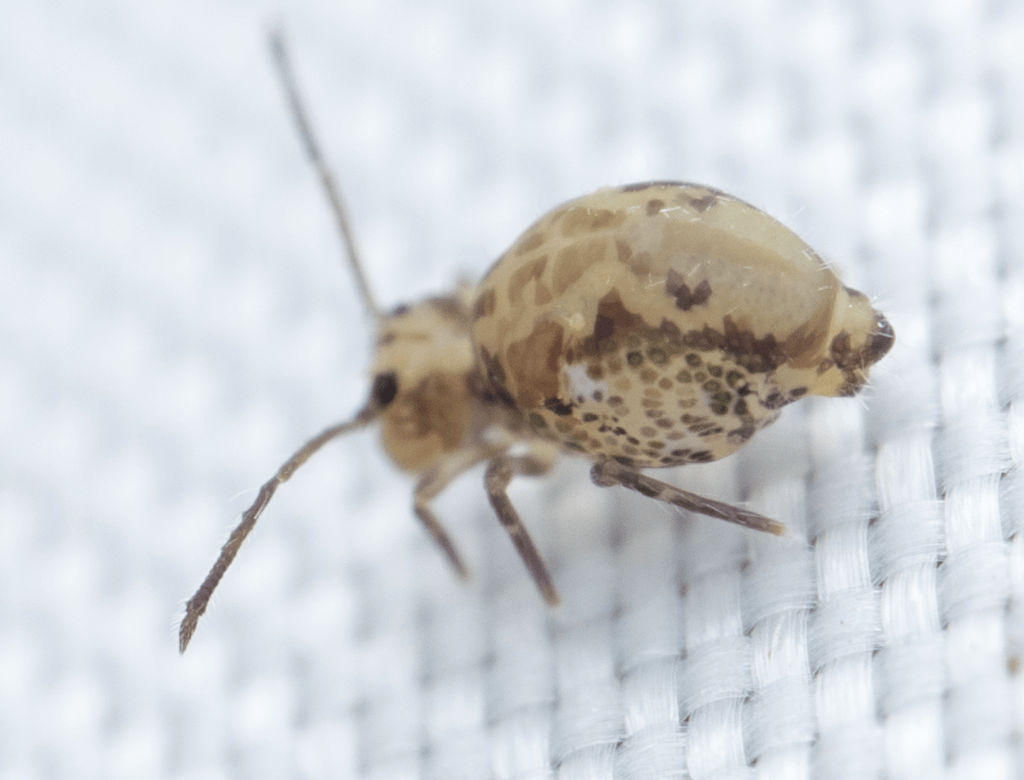
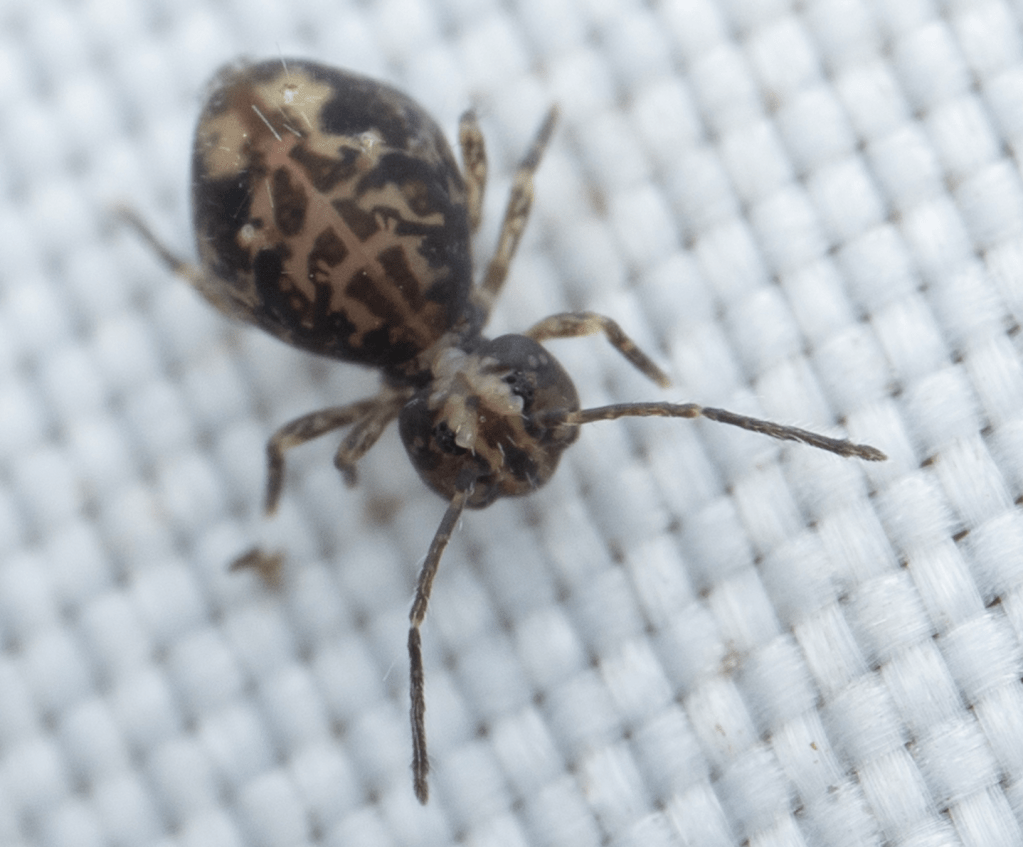
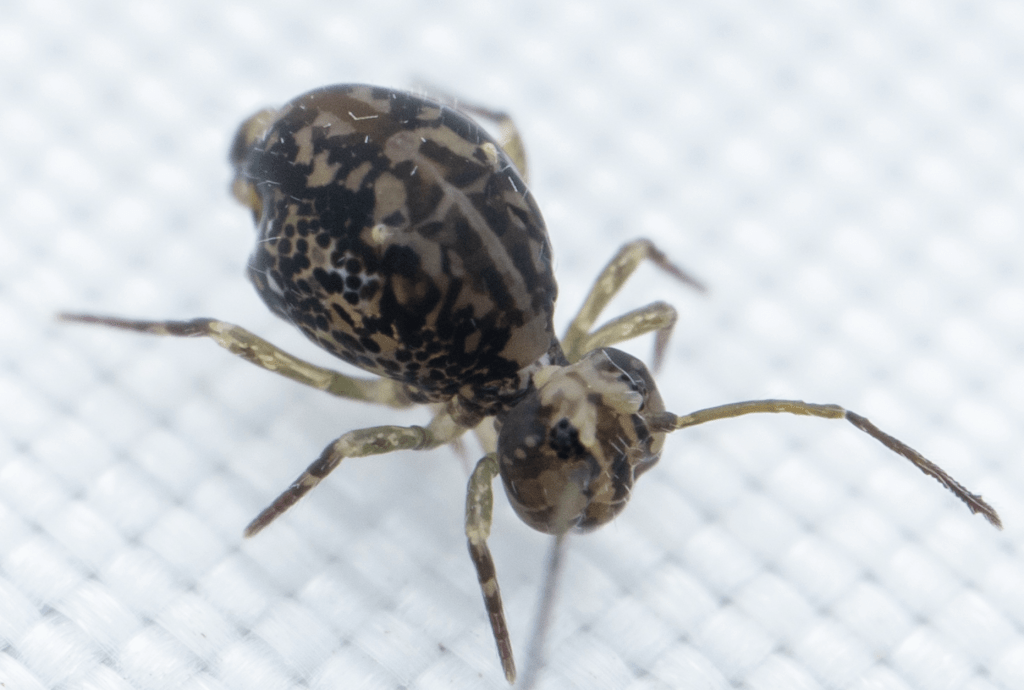
The beta shown at the top is fairly typical, but there’s quite a bit of variance in patterns available. This is particularly evident in various lighter-coloured young individuals. They can entirely lack pigment on large parts of the abdomen. Often we’ll have to use secondary hints that are not always present, such as olive green on the legs, and spotting on the lower flanks – both of which are never present on P. delongi, but reasonably often present on P. beta.
How to improve
I recommend checking through existing Research Grade P. beta and P. delongi on iNat, and try to find each of the features I’ve defined above, or note when they are missing. Keep a close eye out, there’s always the chance of a past incorrect ID, and I really appreciate it when someone can point out something I missed.
Good luck, and ask me questions as they come up!
 Ptenothrix
Leave a comment