
(TL;DR – species 3 is Keyser Söze)
This story begins 12+ years ago, with our hero Frans Janssens trying hard to ID blurry photos of springtails on the internet. The task involves grasping at whatever small hints you can find, including the overall appearance in the photo, any tiny hints from small but significant hairs that may be visible in some photos, and a process of elimination involving what it can’t be.
One thing that can happen in this scenario, similar to having filled in a wrong word in a crossword puzzle, is that an earlier decision about what a certain species looks like can consume a “spot”, and now other later decisions don’t work. This seems to have happened due to some cryptic statements in the descriptions, and weird habitus drawings.
Note: this article makes many references to Frans’s entries on collembola.org under Ptenothrix.
Mistaken P. beta
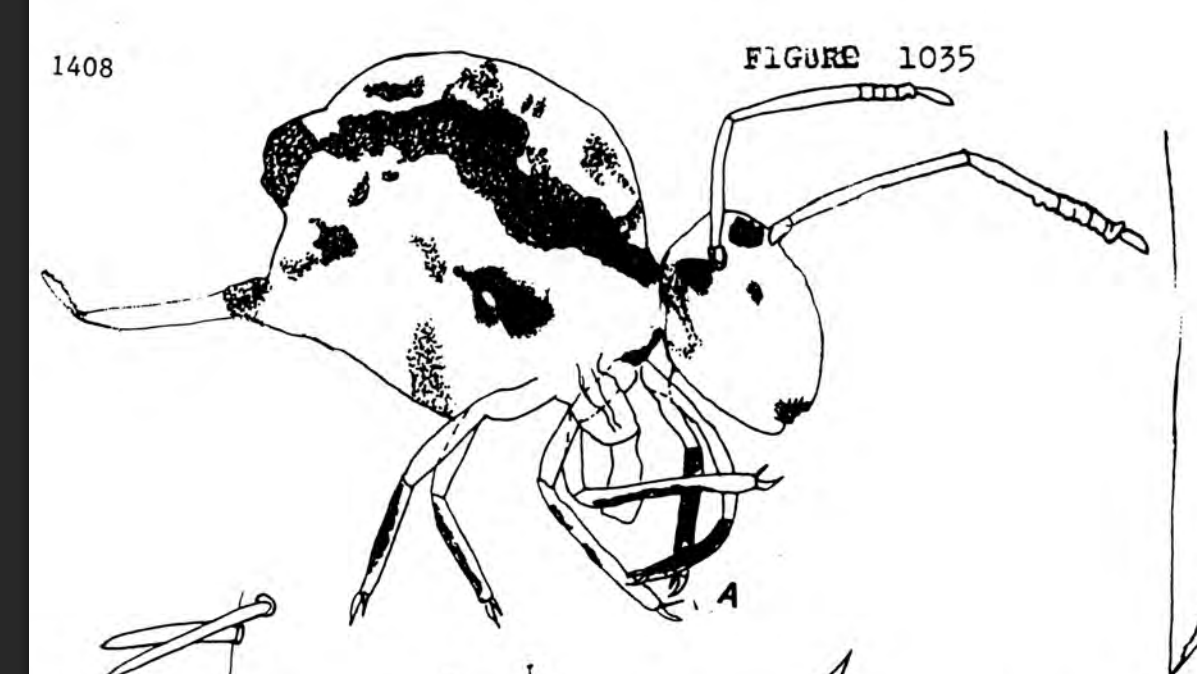
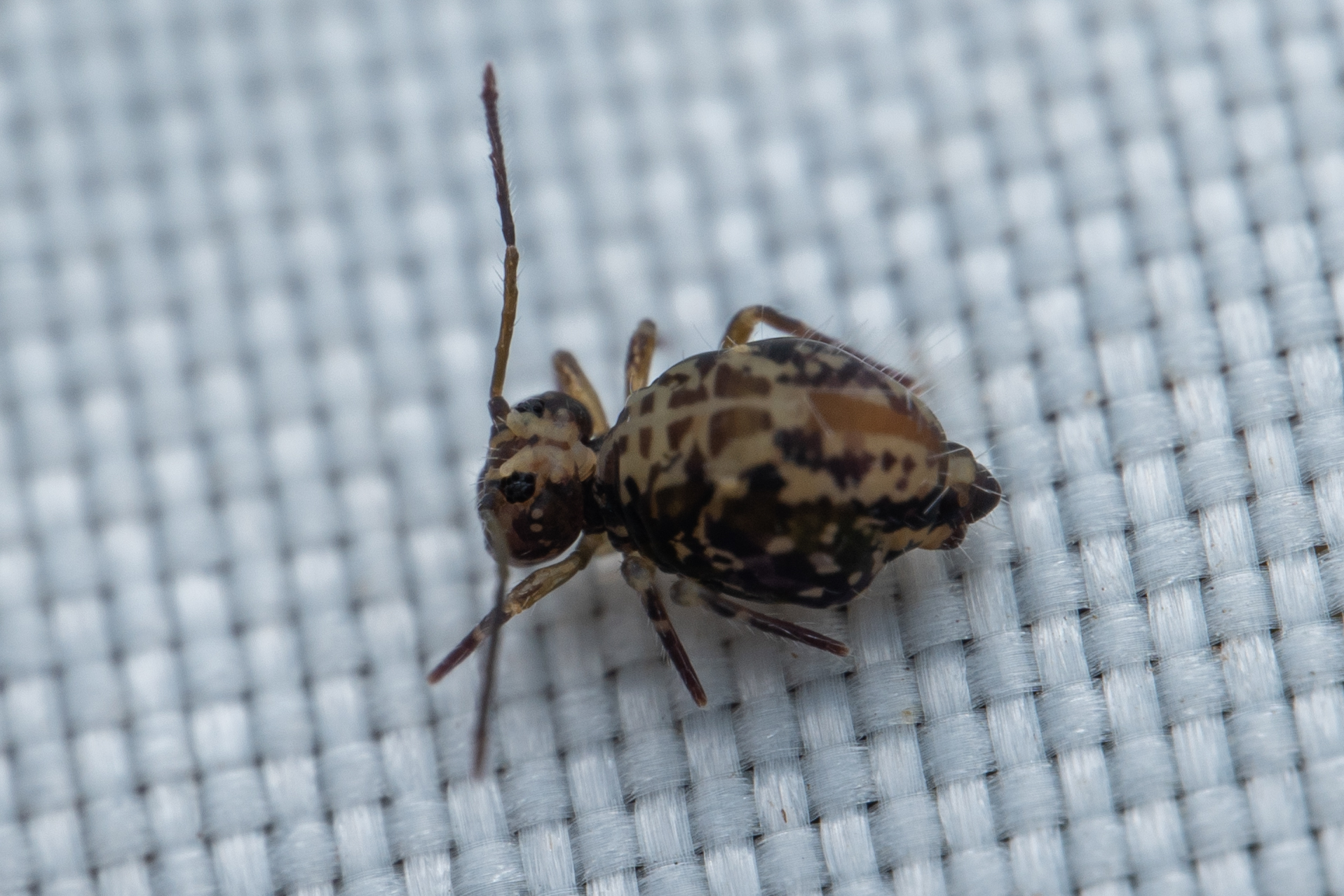
So firstly I’d like to complain about this habitus image presented in C&B 1998, which is a) not showing a lot of important marks (see my field guide entry on P. beta), and b) showing an absolutely awful example that doesn’t correspond with most betas out there. As a result, most of Frans’s section on P. beta actually mistakenly consists of P. delongi and P. californica. And notably, the habitus diagram from C&B about P. californica is also hot garbage, and so Frans really wasn’t able to figure out that species either and left it mostly blank.
Missing P. delongi
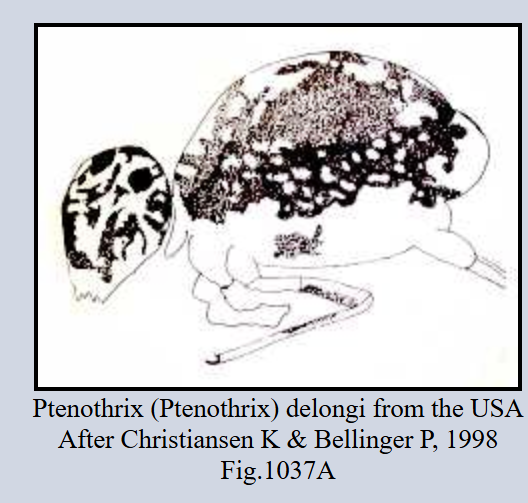
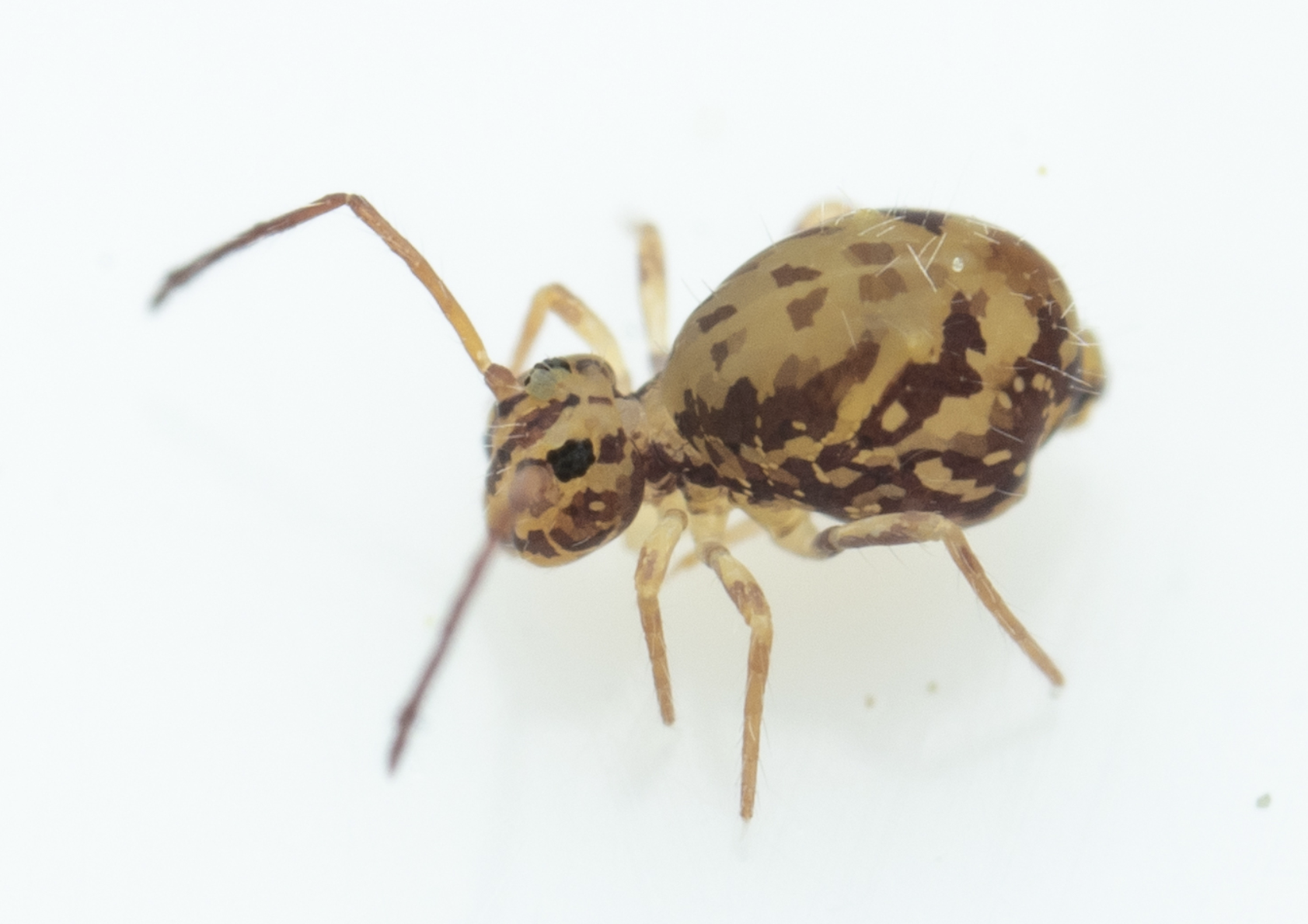
As seen in my previous writing on P. delongi, its appearance was basically unknown until recently. We can absolutely see why, given the horrendous habitus diagram. The only way to figure this out was through microscopy on collected specimens. Therefore this piece of the puzzle remained “missing”, with the actual appearance clogging up the P. beta slot.
Mistaken P. maculosa

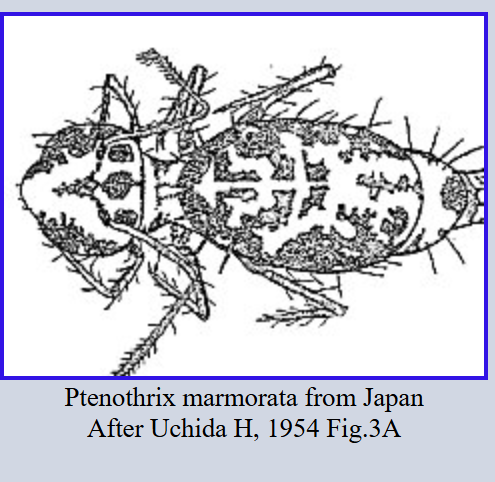
So now we come to Frans’s entry for our topic for today, Ptenothrix maculosa. What we see above is the absolute trash diagram from C&B on the left, but also the correct diagram from Uchida seen on the right (note for later: you can see “cup”, “booties”, and “airplane” patterns). Although Uchida had it incorrectly as P. marmorata, Frans realized that it should refer more appropriately to P. maculosa….but also never matched it up with the similar pictures on the internet, unfortunately. So close!
What we also had, however, was a cryptic note in C&B under P. beta, saying “It resembles maculosa superficially and is sometimes found associated with that species.” So what appears to have happened, given that the Frans conception of “beta” was actually delongi and californica, is that it now made sense to combine the horrible habitus diagram with this hint about resemblance, and basically fill in the “maculosa” hole with what is in reality P. beta! This no doubt made it feel somewhat self-consistent, and provided a way to deal with all the actually-beta pictures online, but left a lot more photos undetermined.
Actual maculosa?

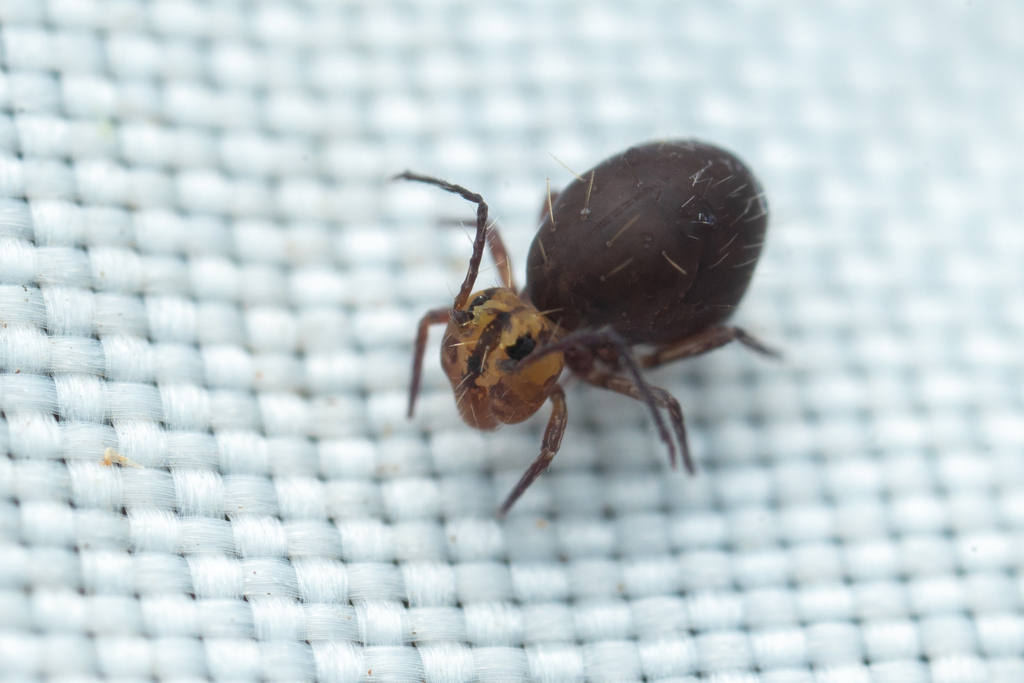
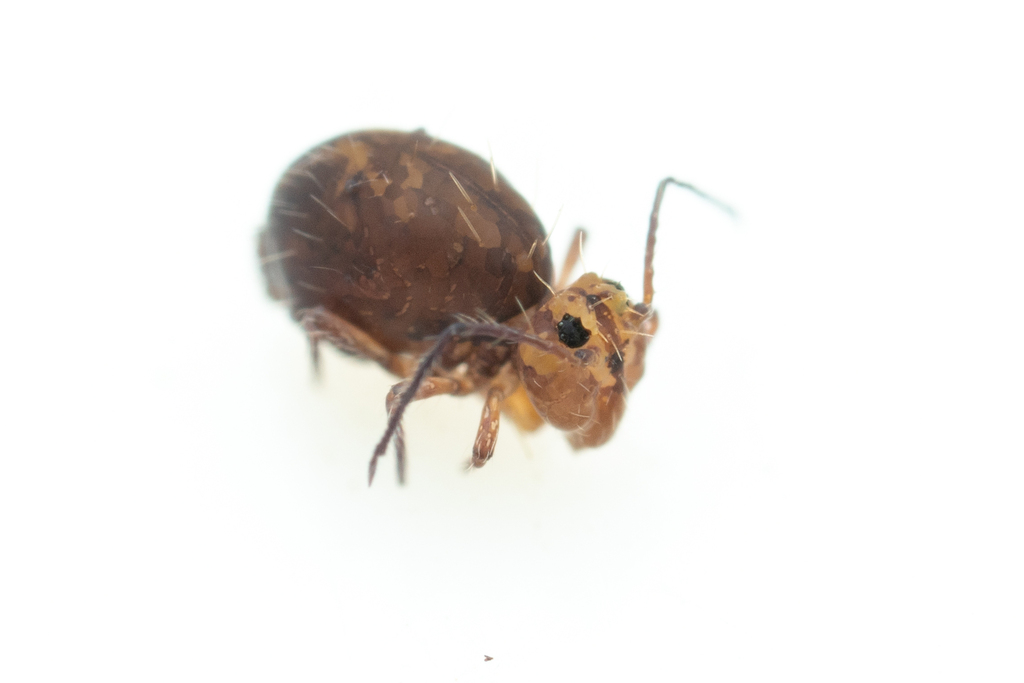
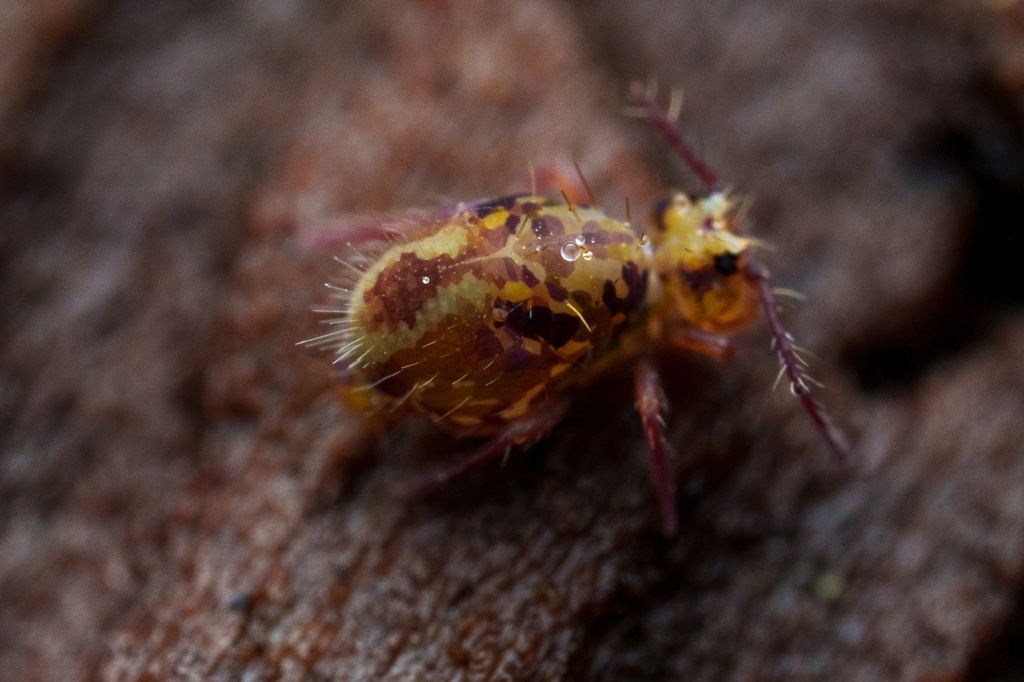
So what is our true Ptenothrix maculosa? It turns out it was hiding in plain sight, listed as “undescribed species 3”, “species 4”, “species 5”, and others. Personally, I was able to mentally slot this in and confirm it via microscopy after I had removed the existing “maculosa” as P. delongi, leaving a tidy spot to slide “species 3” into.
The required characteristics of P. maculosa are as follows:
- small abdomen acanthoid setae: T+, H+, G+, a0-, sa-
- dental setae heavily serrated
- dental seta ratios E1/E2 = 0.7, E3/E2 = 1.25
- large acanthoid setae on the anterior abdomen
- 2 unpaired acanthoid mid-facial setae
- lateral abdominal setae FF – JJ setaceous
In addition to these, C&B also mention “this is the common West Coast species“, and “there is a good deal of interpopulation variation in pattern, ungual structure, dental chaetotaxy, and shape and sizeof median facial setae“. It was actually quite funny, looking back, that we had been saying things like “how could the most common species in our area be these undescribed ones?? What a big miss!”, and “wow, these undescribed ones seem to be really visually variant”. Lessons learned!
In checking them, I did want to see if some amount of these could perhaps be split off into a separate species, and I did find some of the variant characters: the 2nd row of dorso-lateral setae varies in number from 8 to 10, with 3 of the above examples having 10 setae there, and one having 8. Also, the ratio of E3/E2 was right around 1.25 on a different 3 examples above, with one of them having a ratio of 1.37. In essence, this is a bit like a ring species, where the ends can be quite different, but there’s a blurry overlapping set of examples between them such that no clear species line can be drawn. If the four examples have feature 1 like “A A A B”, and feature 2 like “D C C C”, then one endpoint is “A/D” and the other endpoint is “B/C”, but the middle ones provide a fuzzy link between them as “A/C”.
One more detail is that I’m often seeing an E1/E2 ratio of around 0.9 instead of the listed 0.7, but some of them do show up with 0.7 too. This seems to visually correspond with the final very thin tip on the seta being either short or a bit longer, with the body of the seta being basically the same on both. I would therefore consider these more like the ranges like so:
- E1/E2 = 0.7 – 0.95
- E3/E2 = 1.2 – 1.4
- most common pairing in my area is 0.9 / 1.25
Visual Identification

The amount of different colour patterns of these is honestly nuts. Some can be completely yellow, others completely purple, and there are several other patterns between. But what I’ve illustrated above are some very typical common patterns, which I’ll name here.
Red: facial markings
It seems to be quite consistent for these guys to have a thick dark midfacial stripe. There’s also often two wide stripes running backwards behind the eyes. These happen on the vast majority, even across different pattern types. Relatedly, the lower front cheeks are often dark too, but not as consistently.
Blue: the cup
This pattern happens at the absolute anterior spot on the abdomen, on patterns that have a light coloured medial stripe. It typically won’t be visible on variants with a dark medial stripe, like the so-called “eiffel tower” or “species 4” types.
Green: booties
There are a variety of forms of these, sometimes blending wider when the surrounding color is also light. These actually illustrate a visual effect that when the majority of the colouring is dark, then the light splotches form unique shapes, but as specimens have more and more expanded light areas, we start to perceive only the minority dark areas as having shapes.
Pink: the airplane
This is a very common pattern, and hints of it occur across many Ptenothrix species around the world, but it’s particularly prominent in the maculosa individuals with a light medial line.
Alternative pattern: Eiffel tower / “species 4”
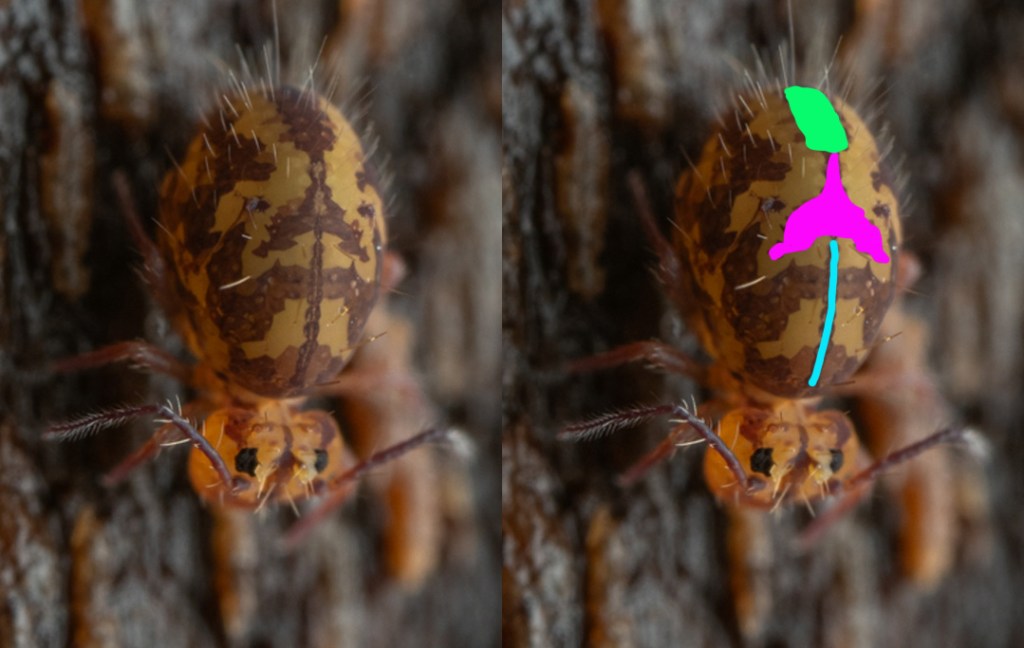
In this colour pattern, you want to see the dark medial line (cyan), and the undivided dark butt patch (green), and of course the “eiffel tower” itself, in pink here.
This form has many shades too, where the light portions can in various places get dark and darker until they match the dark parts everywhere. There seems to be a spectrum of these all the way to “grapes” with full solid purple abdomen colouring.
Grape format
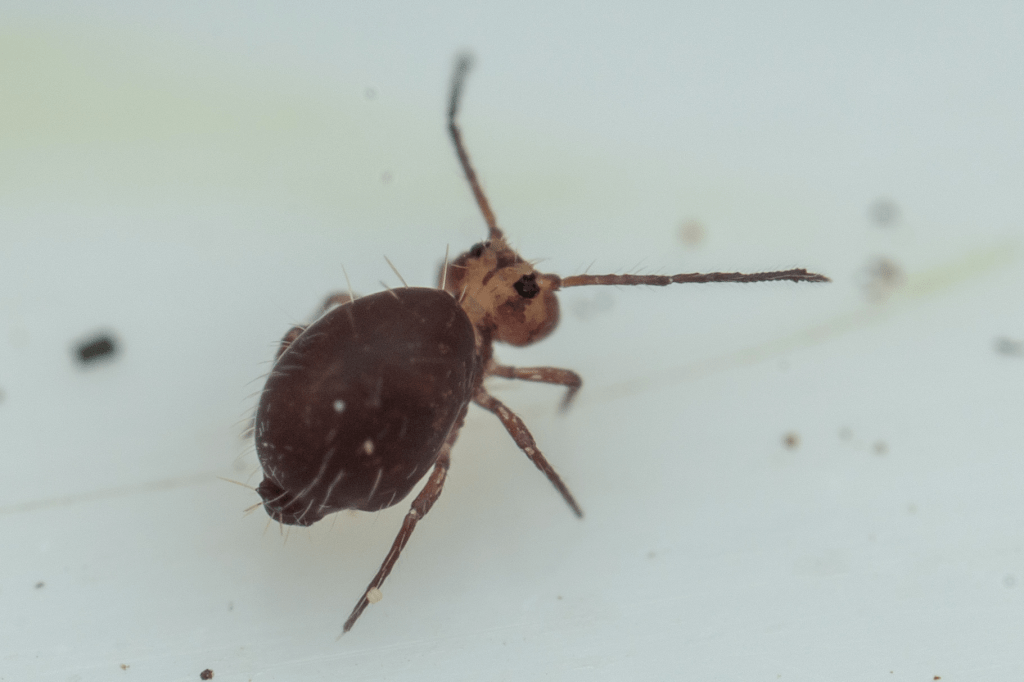
The grape form is also important because it is the dominant colouring during the summer season. This was, in the past, confused with Ptenothrix palmata, because in C&B the key says that if the body has a solid colour, it should key to palmata.
The problem here is that palmata is an arctic and alpine species, but maculosa is found in lower coastal forests. So in the places where most people will observe these, there’s a high chance for mistaken ID if trying to follow that key. The crucial detail to tell these apart is that the “H” seta on the small abdomen should be non-acanthoid in P. palmata, but is a nice thick spiny seta for P. maculosa, and that’s exactly what we find amongst the grape Ptenothrixes found in coastal forests (along with a few other small details).
One more interesting detail is that there was previously a statement by Frans that a white neck line was required for a P. palmata ID, but I’ve found both yellow-neck and white-neck specimens that all had the acanthoid H of P. maculosa.
Summary
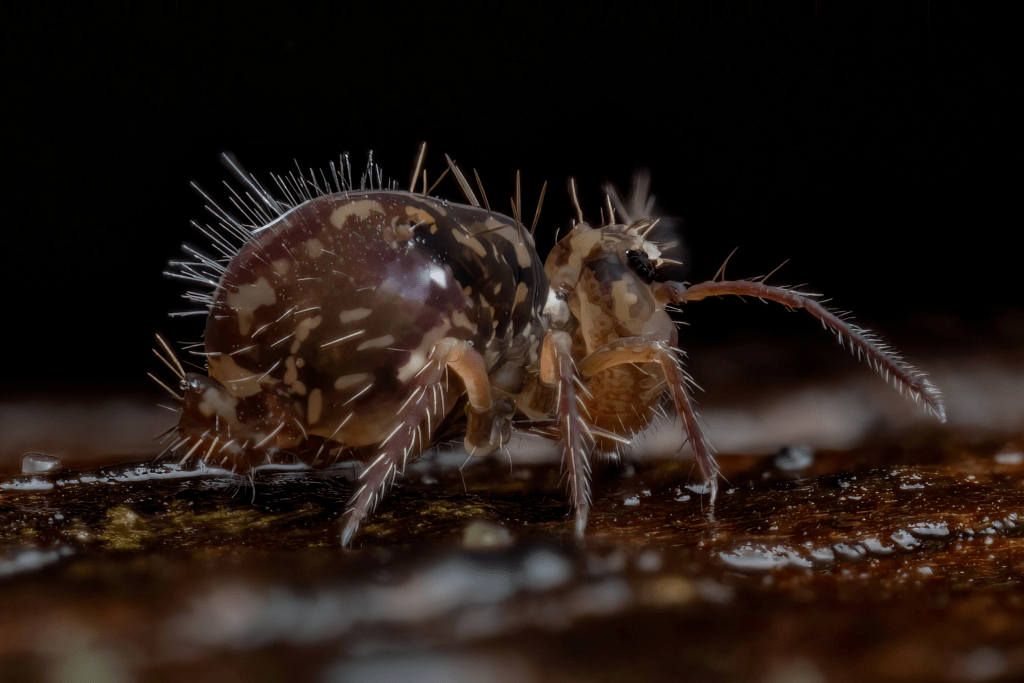
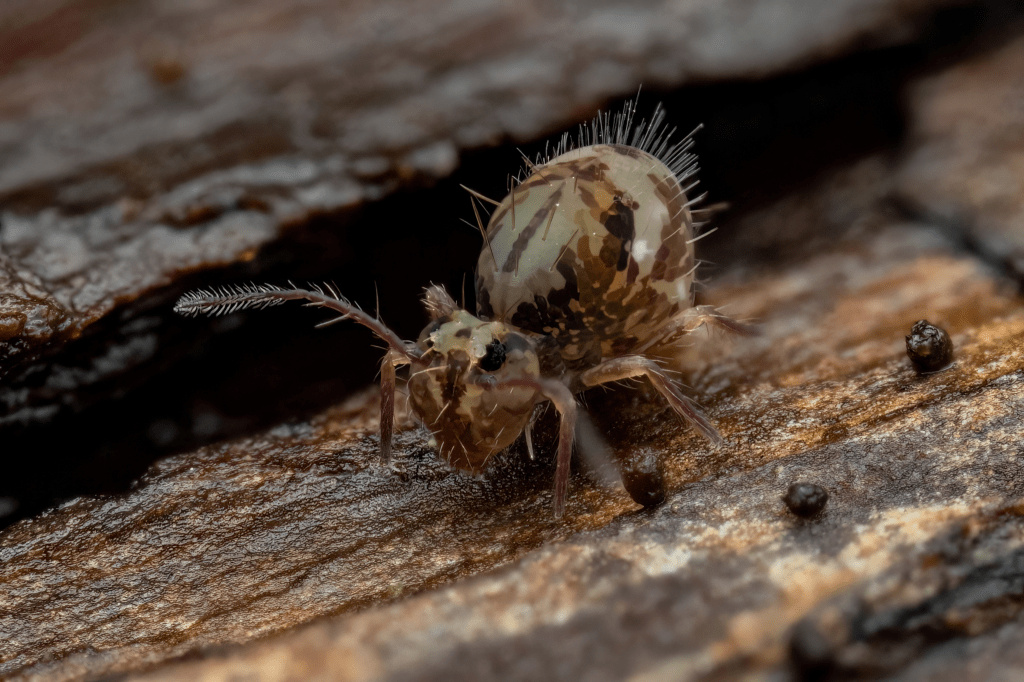
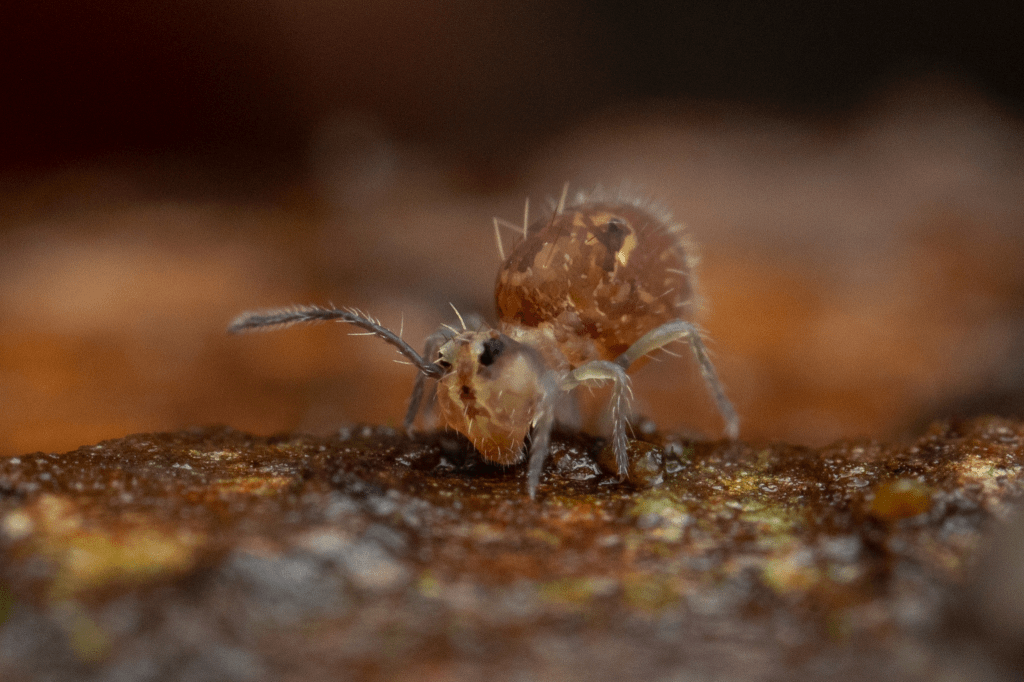
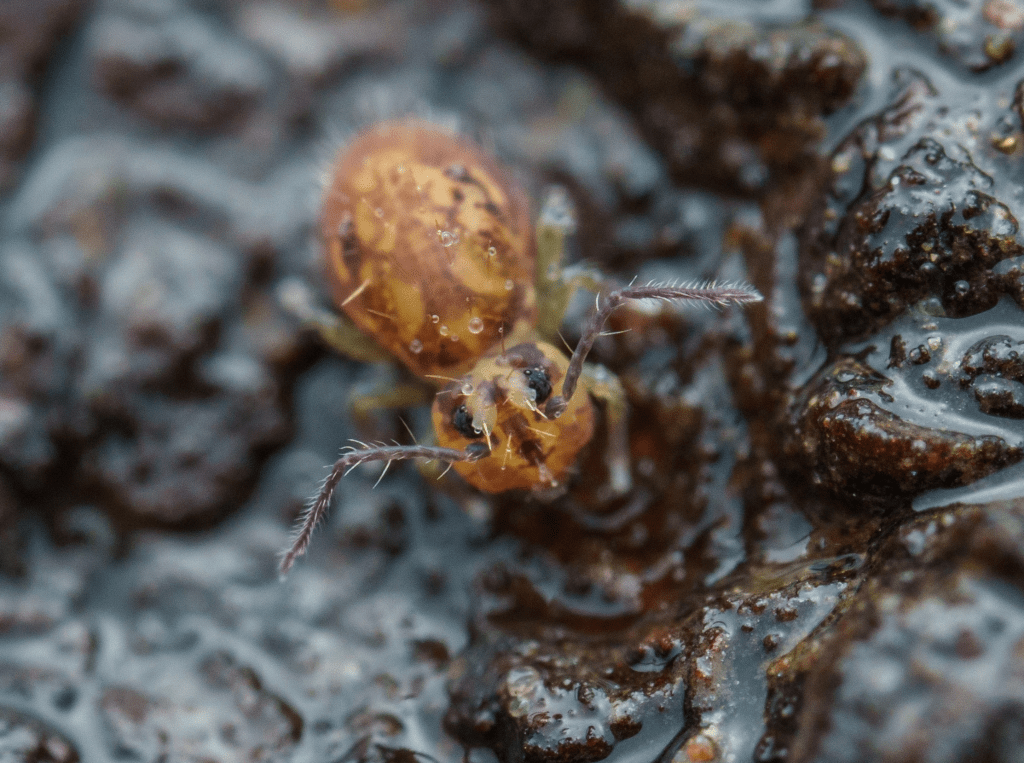
Everything on collembola.org under Ptenothrix species 3, 4, 5, 7, and 8 is most likely properly IDed as Ptenothrix maculosa. This is the common species of Ptenothrix along the west coast in coastal lowlands forests. They have noticeably large head and body spines, a thick mid-facial line, and usually 2 thick ear-blobs behind the eyes. Their abdomen pattern varies widely, but is mostly the “grape” pattern in the summer, and then one of 3 major patterns in the winter (roughly sp.3/4/5).
happy IDing!


 Ptenothrix
Leave a comment