
Sminthurinus is a genus of very small globular springtails, several of which are difficult to visually ID, having a lot of visual variants that can seem to overlap with each other. Because of the mix of known species that haven’t been seen on iNaturalist, and the other potentially new species, along with existing species variants we don’t yet know how to ID, there’s a lot of interesting work that can be done here by iNaturalist photographers and microscopists. Here I’m going to outline the common species, and point out some of the current interesting mysteries.
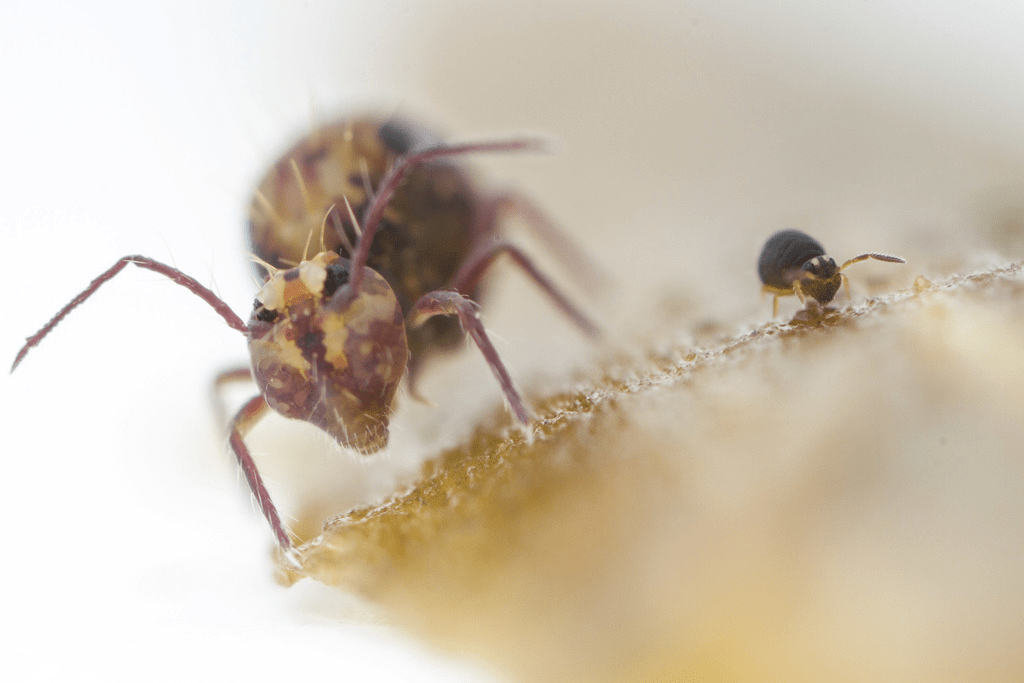
photo: Thomas Barbin
Common species
First let’s go over the most common 3 species that people have been easily finding. These are: S. henshawi, S. elegans, and S. quadrimaculatus, in approximate frequency order. We can summarize their appearances as “yellows”, “stripey watermelons”, and “all dark”, but there are some complications around those that we’ll get into later.
Here’s maybe the most common form of S. henshawi, which is light yellow with slightly darker flanks, and some light cross-body striping (but not longitudinal striping). They can also be lighter yellow, maybe slightly orangey, and with less cross-striping.
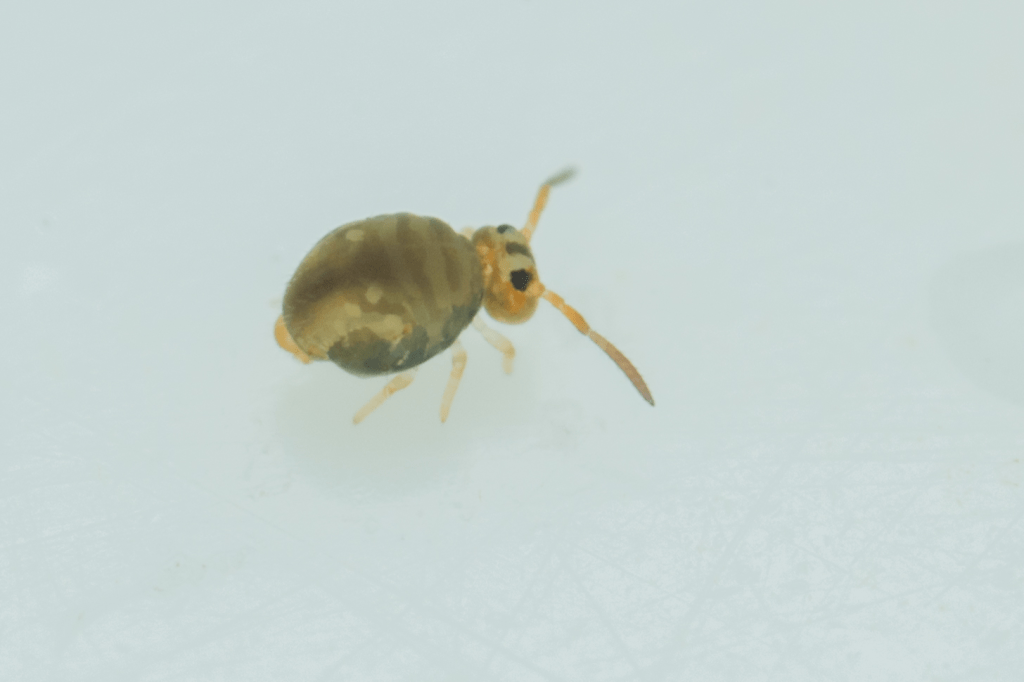
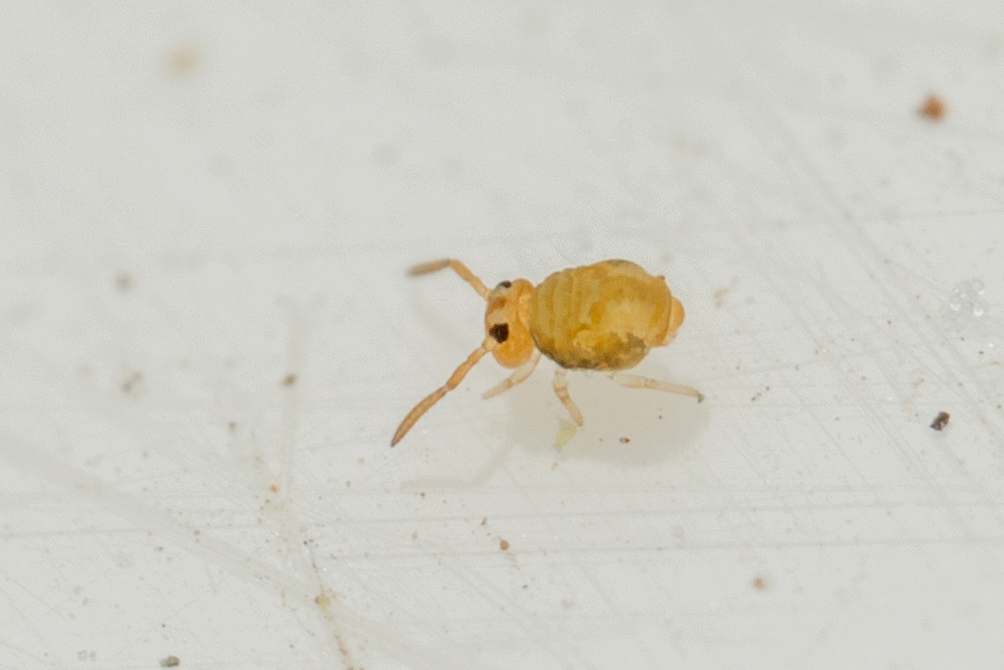
Next up is Sminthurinus elegans, which has longitudinal stripes. It’s also speculated that some of the ones with all-black body and yellow legs could be this species as well, but that’s probably still under the “mystery” category.
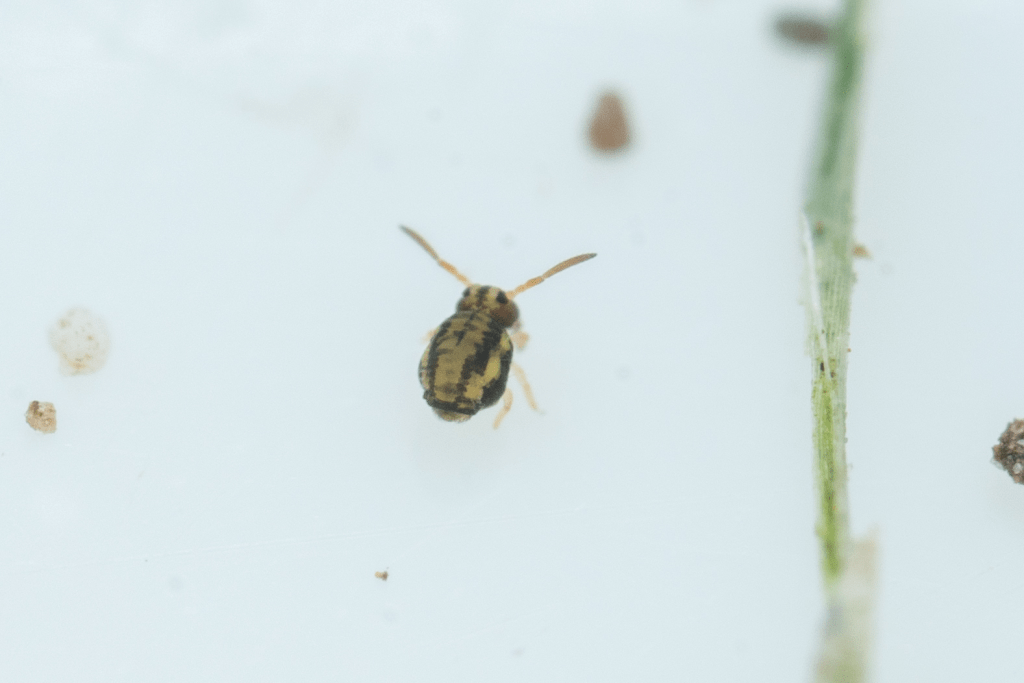
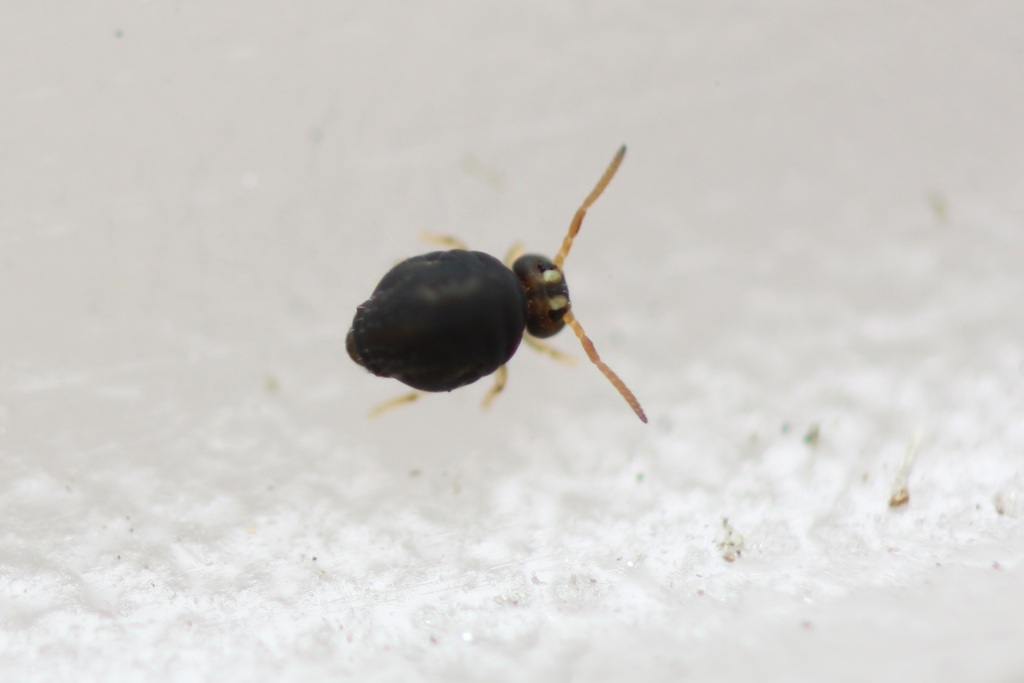
And the third common one is Sminthurinus quadrimaculatus. This species apparently has several different colour forms, ranging from having 4 white dots like the name indicates, down to just 2 dots, to no dots at all in the all-dark form. As far as we can tell so far, the 4-dot version seems to only be east of the Rockies
Uncommon species
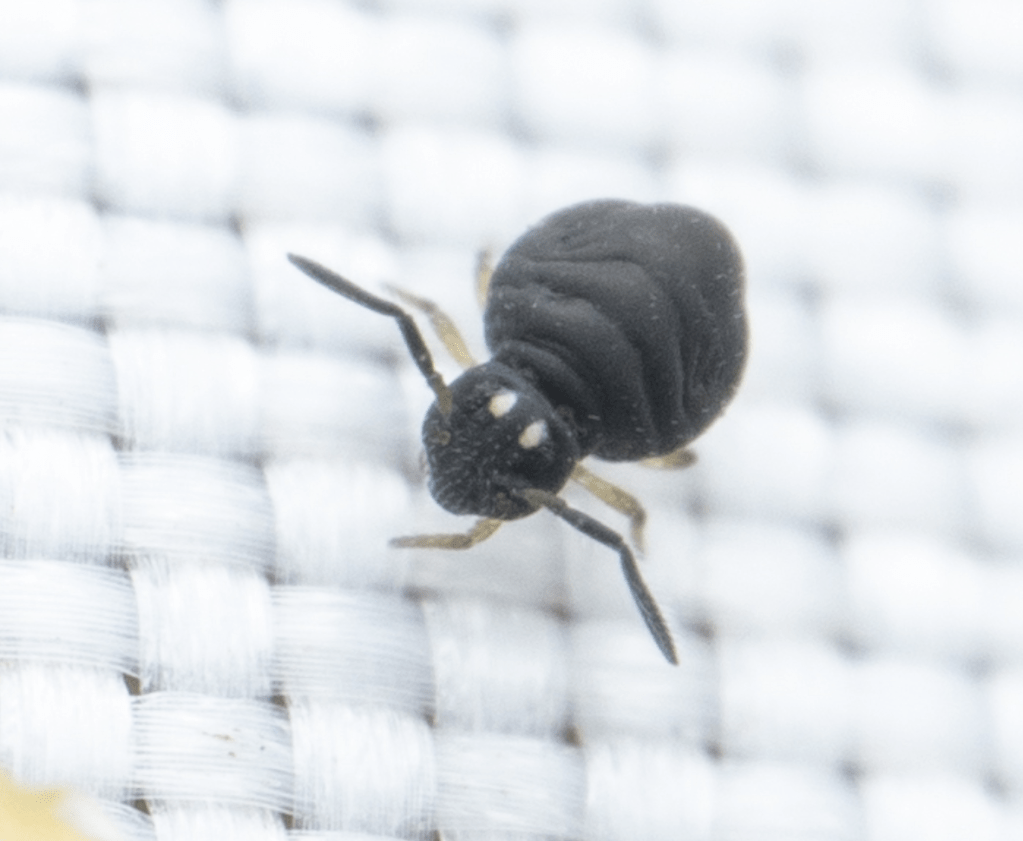
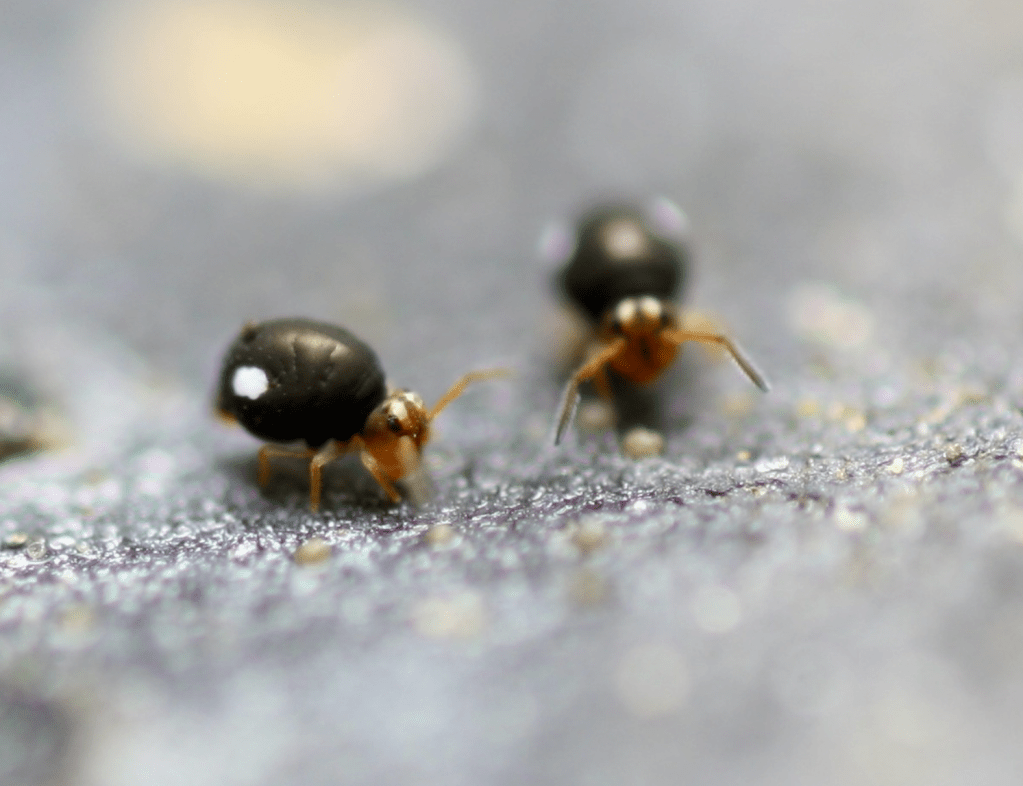
The next 2 species seem to be much more rare in BC, going by personal experience and iNat observations. This would be Sminthurinus lawrencei, and Sminthurinus atrapallidus. Both of these are basically all-black like the zero-spot version of quadrimaculatus, but are distinguished by their unique eyebrows.
S. lawrencei seems to have a bit lower-profile body shape, and its white eyebrows are thinner, and spaced much further apart relatively. The white part doesn’t reach the front of the eyepatch…or said a different way, it has a bipartite eyebrow where only the rear section is white.
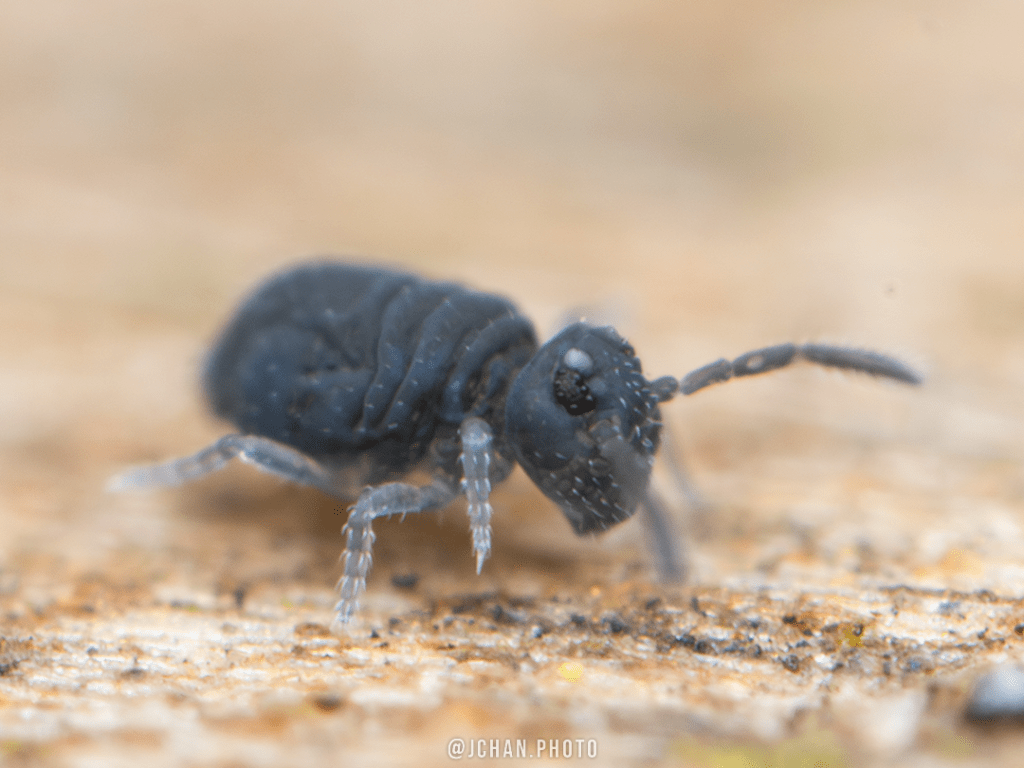
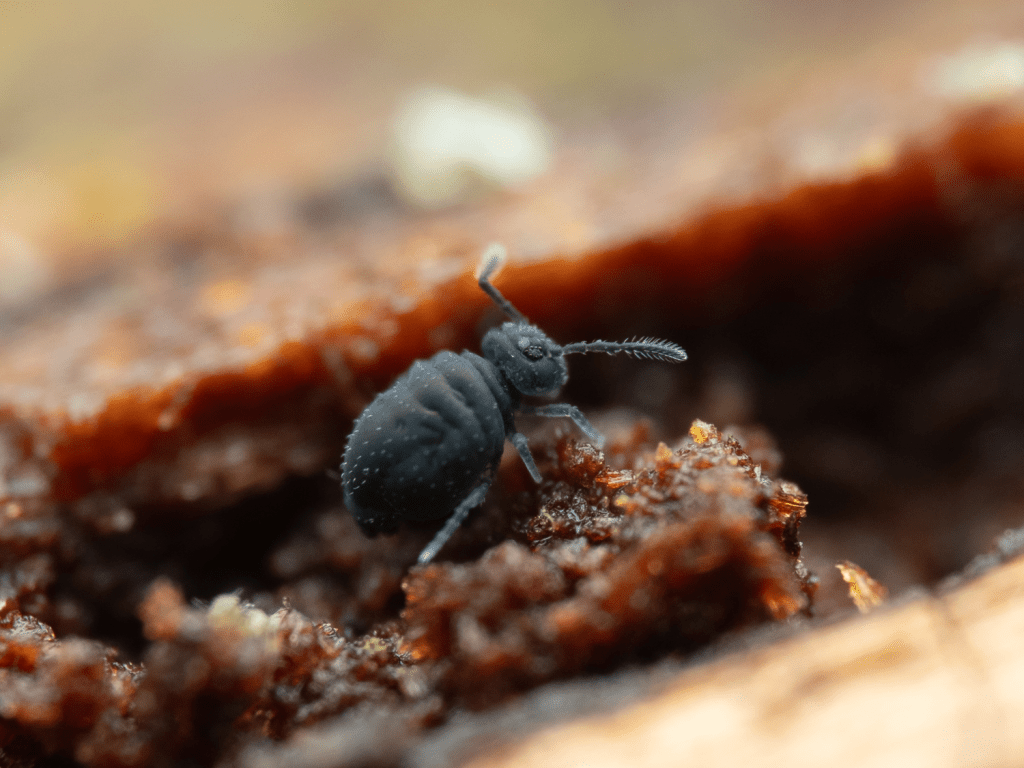
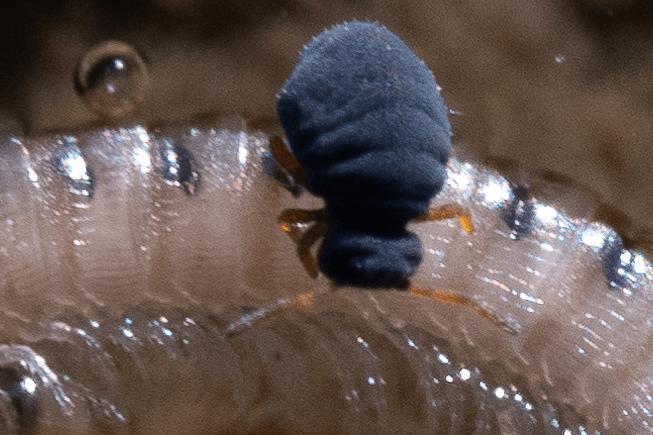
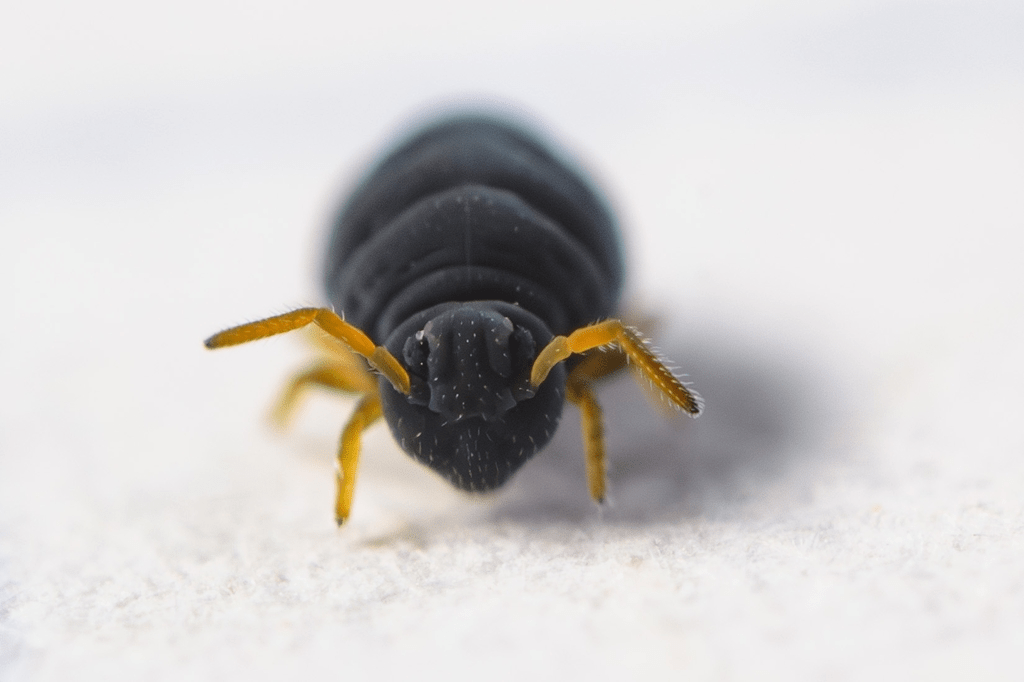
Meanwhile, S. atrapallidus is distinguished by its dark eyebrows. Overall, it’s black everywhere except the orange legs and antennae. This species has been seen so far in 2 unrelated spots in BC, which are a muddy agricultural field in Delta on the coast, and a semi-arid sagebrush area in Spences Bridge.
Mysteries!
Ok, now that we’ve covered the standard stuff that’s fairly well known, we can get to some of the weird or unknown things.
S. aureus?
Maybe I’ll start off with a recent find of mine, which was a very saturated orange guy that visibly stood out from the nearby henshawi, so I took him home to take a look at. Under the microscope, I was able to show that it seemingly keyed to S. elegans due to the configuration of setae on the dens (the forked parts of the jumpy organ underneath), but elegans are not known to be bright orange.
Alternatively, in Europe there is another species that has the same chaetotaxy as S. elegans but is bright orange, and that is the appropriately named S. aureus.
https://www.inaturalist.org/observations/288399876

At this point, it’s a bit early to be declaring this guy to be S. aureus, but the other option could be that there’s an orange species with this chaetotaxy within North America, separate from S. aureus. Another option is that our S. elegans is different from European elegans, with ours having a gold form. European elegans and aureus are a bit confusing this way too, because they seem to be chaetotaxically the same. I’m not actually sure who proposed that they could be different species, and how they determined that.
Right now the first thing we probably want to do here is collect more of these and check them under the microscope. They often are getting labeled as S. henshawi, but I don’t know whether S. henshawi actually has a “gold” form or not anymore. If we check a bunch of these and they all come out as “not henshawi”, then we’d have to bump a lot of inat observations back to genus.
Another thing we could do is collect a bunch live, and raise them in an enclosure, and just see if any of them produce watermelon-style offspring, indicating that they are a recolour of our elegans.
All black with orange limbs?
There are some of these all black ones with light eyebrows and orangey limbs. Some have a dark orange head, and some have a black head. According to C&B 1998, “[S. elegans] darker forms resemble S. quadrimaculatus in pattern”, which it seems is our reasoning for calling these S. elegans, but I’m actually curious if anyone has checked. So I encourage some curiousity here, especially since a lot of different species seem to “resemble quadrimaculatus“.

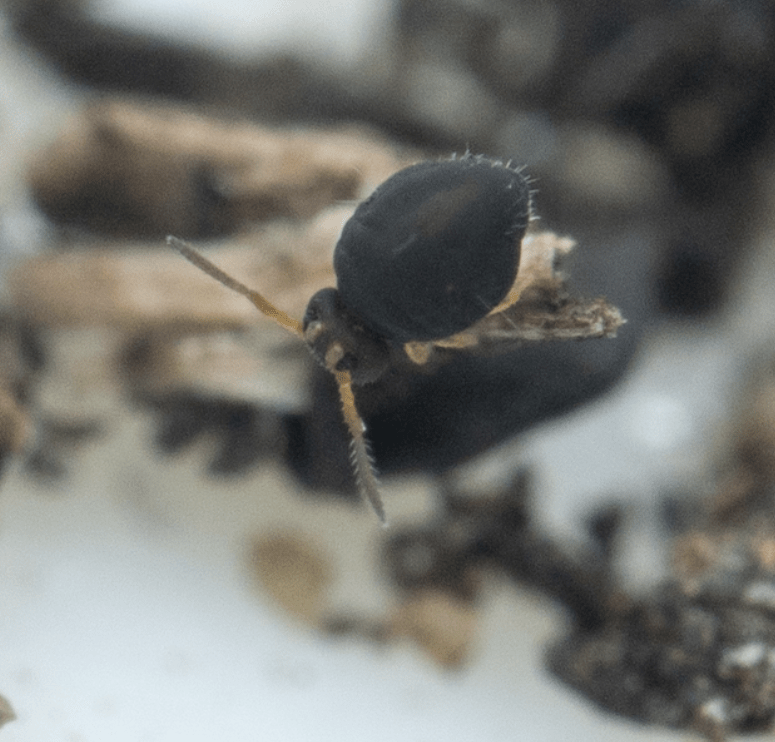
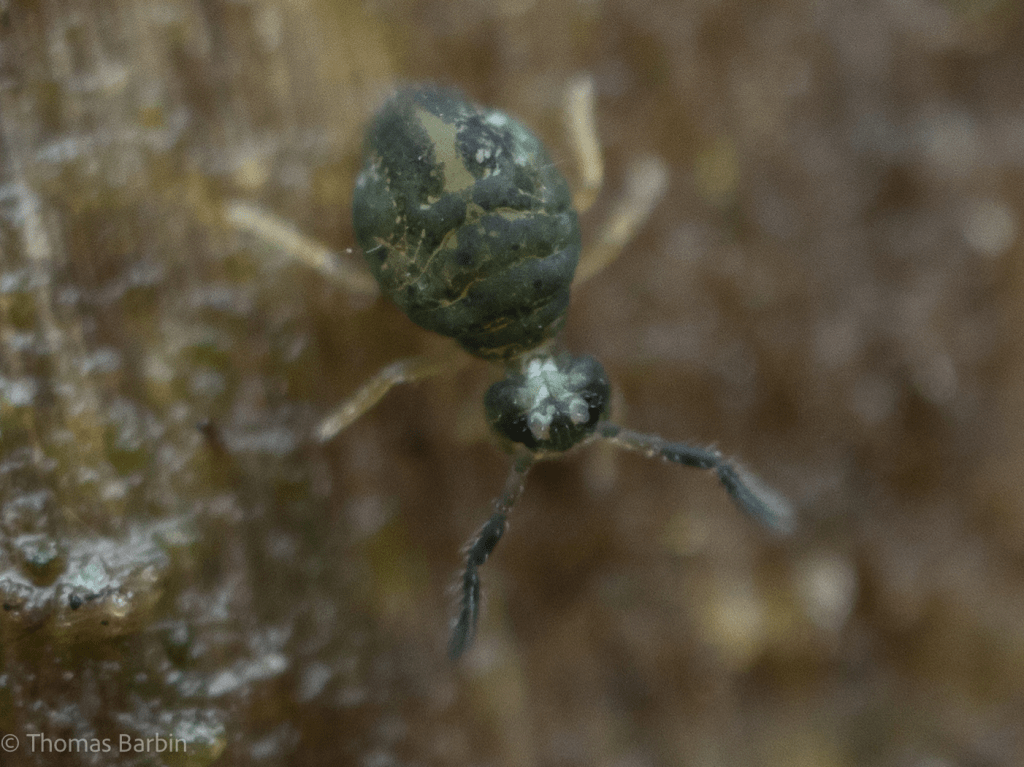
The green guy, omg
whatever this guy is, srsly
https://www.inaturalist.org/observations/265450706
Missing species: S. conchyliatus?
This species, which was described from Illinois, has been noted as present in BC in the past. It’s not super clear what it looks like, other than probably pretty similar to quadrimaculatus. The original description says:
Antennae uniformly purple. Head and trunk purple-brown with scattered dots and lines of lighter pigment. Frons darker than genal areas, interantennal spot present with a small colorless bar-like line beneath it, light areas occur around the inner dorsal edge of the eye patches. Abdomen with many light spots and polygons of pigment; anal papilla with two dorsal pale spots in the shape of a comma. Legs dusted with purple, becoming lighter distally.
BC recorded presence is noted in Babenko 2019 with:
Setälä & Marshall 1994; Setälä et al. 1995; Skidmore 1995; Addison et al. 2003
The Setälä papers were about Shawnigan lake IIRC, and Addison was about assessing 2nd growth vs old growth forest generally near Victoria.
So I think our strategy here is just to check microscopy on a lot of “quadrimaculatus-esque” specimens, particularly on Vancouver Island.
Further reading
- Addison et al, 2003; Abundance, species diversity, and community structure of Collembola in successional coastal temperate forests on Vancouver Island, Canada
- Bezouw, McCulloch, Janssens, Berg, 2022; An emended description of Sminthurinus lawrencei, with notes on the identification of black Sminthurinus species
- Babenko et al, 2019; An updated checklist of Canadian and Alaskan Collembola
- Snider, 1978; New Species of Sminthuridae from North America (has description of S. conchyliatus and others)
- Christiansen & Bellinger, 1998; Collembola of North America north of the Rio Grande, part 4: Sminthuridae and Neelidae
 Ptenothrix
Leave a comment